
Raman Spectroscopy: Easy as 1, 2, 3!
Introduction
Raman spectroscopy is a powerful analytical tool used in R&D, industrial process monitoring, QC, and routine identification of illicit drugs, pharmaceuticals, and hazardous materials. Our DIY kits give you the flexibility to configure a Raman system with different options for each component, allowing you to optimize the system for your specific application.
Our Raman analyzer consists of three basic components:
1. Laser
2. Detector (spectrometer)
3. Sample Interface (probe)
Need Help Getting Started?
Navigate Below to our Application Note about using different wavelengths for different measurements:
Getting Started
We offer three standard wavelengths for our DIY Raman systems, with custom wavelengths available upon request.
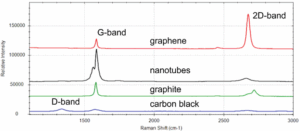
532nm
Why choose 532?
- Stronger Raman signals
- Wider Raman spectral coverage
A 532-nanometer laser provides the highest energy to bombard the sample structure, leading to higher fluorescence and making it ideal for inorganic materials.
Select 532nm
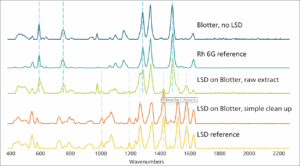
785nm
Why choose 785?
- Lower fluorescence
- Excellent resolution
A 785-nanometer laser provides an excellent compromise between signal strength, reduced fluorescence, and spectral coverage, making it the most commonly used wavelength for dispersive Raman measurements.
Select 785nm
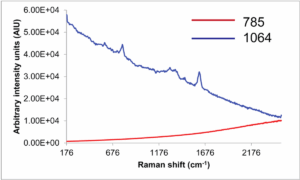
1064nm
Why choose 1064?
- Minimal fluorescence
- Analyze widest range of samples
A 1064 nm laser is ideal for analyzing darker illicit drug samples, botanicals, and highly colored compounds, such as paints and inks, as these tend to have strong fluorescence when using 532 nm or 785 nm excitation.
Select 1064nm
Build Your Custom System
Reach out to connect with an expert and start building an optimized system today!
Contact Us